


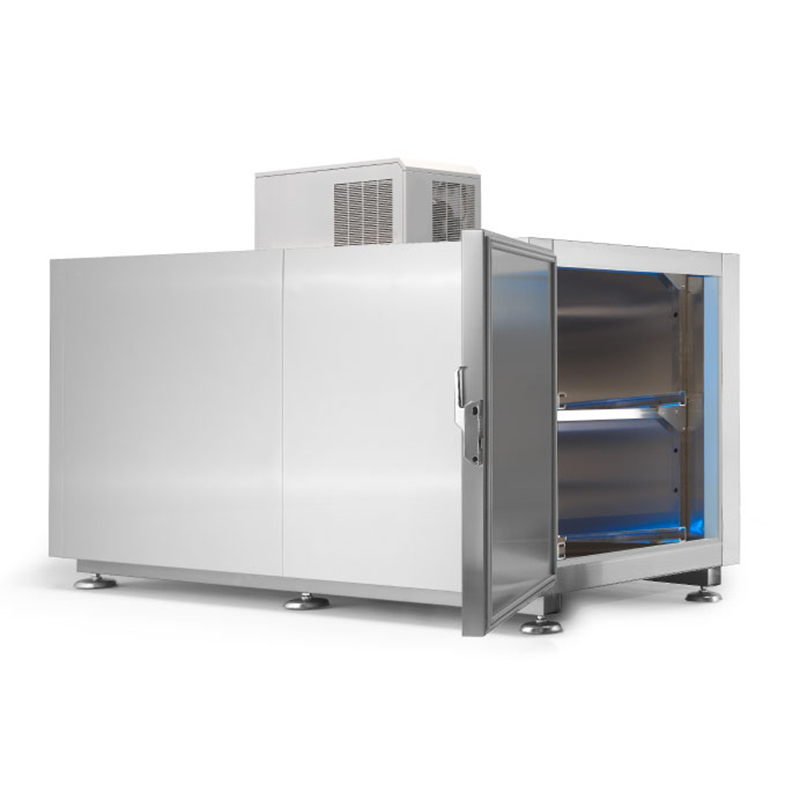
How to choose the ideal solution to optimize operational space
Flexibility, adaptability, and configurations for healthcare and mortuary environments
Modular refrigerated cells are an increasingly popular choice for healthcare facilities, hospitals, funeral homes, and laboratories. Their key strength lies in their ability to adapt to available space and grow alongside operational needs.
Below is a comprehensive guide to understanding requirements, benefits, and selection criteria.
What does “modular” mean in a refrigerated cell?
A modular refrigerated cell is composed of elements that can be:
- configured
- expanded
- repositioned
- integrated over time
without compromising performance or hygiene.
This flexibility enables tailor-made solutions, even in complex environments.
Operational advantages of modularity
Modularity has a direct impact on operational efficiency:
- adaptability to corridors, structural constraints, and workflow layouts
- faster installation compared to traditional fixed cells
- future expansion without replacing the entire system
- greater control over laboratory or mortuary room layouts
Which materials ensure high performance?
MedDom modular cells incorporate:
- high-density panels for maximum thermal stability
- AISI 304 stainless steel for hygiene and durability
- TN/BT control systems for precise temperature management
- robust components designed for continuous operation
These elements guarantee consistent performance and operational safety.
When should you choose a modular refrigerated cell?
A modular solution is ideal when:
- space is limited or irregular
- customized configurations are required
- future growth is anticipated
- fast, clean installation is essential
Modularity enables the creation of efficient, scalable solutions aligned with real operational requirements.
It is an investment that improves space management and ensures continuity of operations over time.

