A comprehensive guide to its properties, advantages, and hygiene standards
When designing healthcare facilities, laboratories, and mortuary rooms, material selection has a direct impact on hygiene, safety, and day-to-day operations. Among the most widely adopted and reliable solutions, stainless steel represents the international standard for furnishings, equipment, and work surfaces.
In this article, together with MedDom specialists, we examine why stainless steel is essential, its technical advantages, and the regulatory requirements that make it indispensable.
What is stainless steel, and why is it different from other materials?
Stainless steel is an alloy of iron, carbon, and chromium. Its defining feature is the formation of a passive surface layer that makes it highly resistant to corrosion, even when exposed to moisture and chemical agents.
In healthcare environments, this translates into:
- a non-porous surface, reducing the risk of contamination
- ease of cleaning and sanitation
- long-term durability, even under intensive use
- thermal stability, supporting processes involving refrigeration and temperature variations
It is a material specifically designed to withstand demanding conditions while simplifying operators’ daily work.
Why is AISI 304 stainless steel used in healthcare and mortuary environments?
AISI 304 stainless steel is the most commonly adopted standard for:
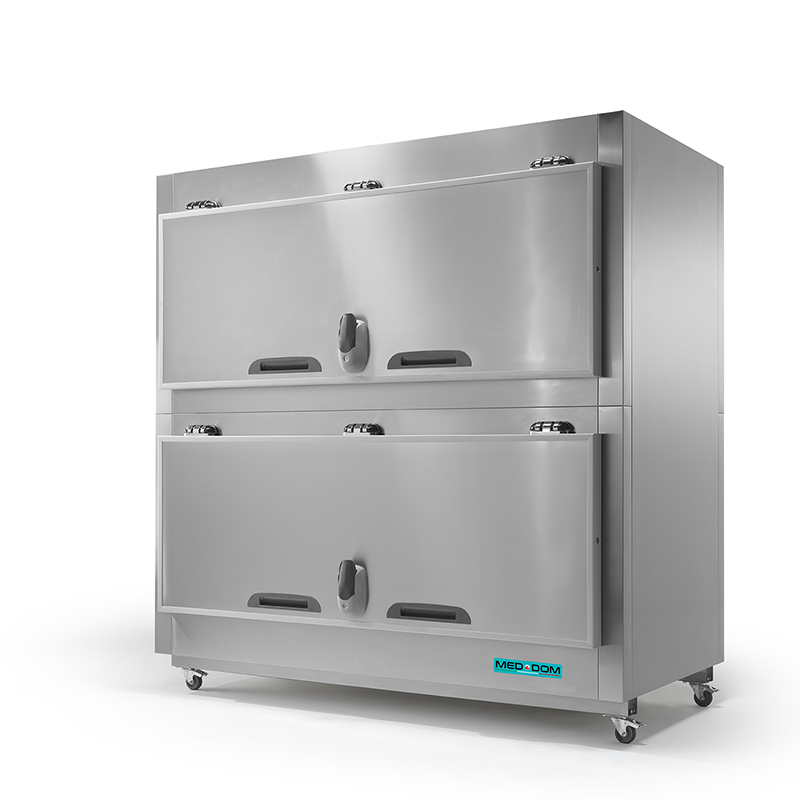
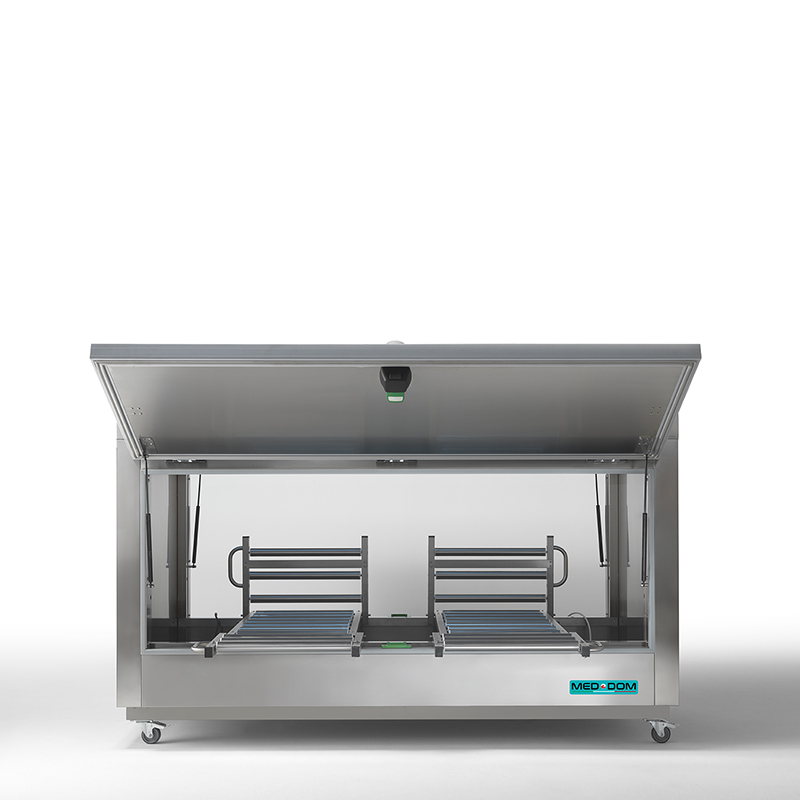
- mortuary equipment
- sinks and preparation worktops
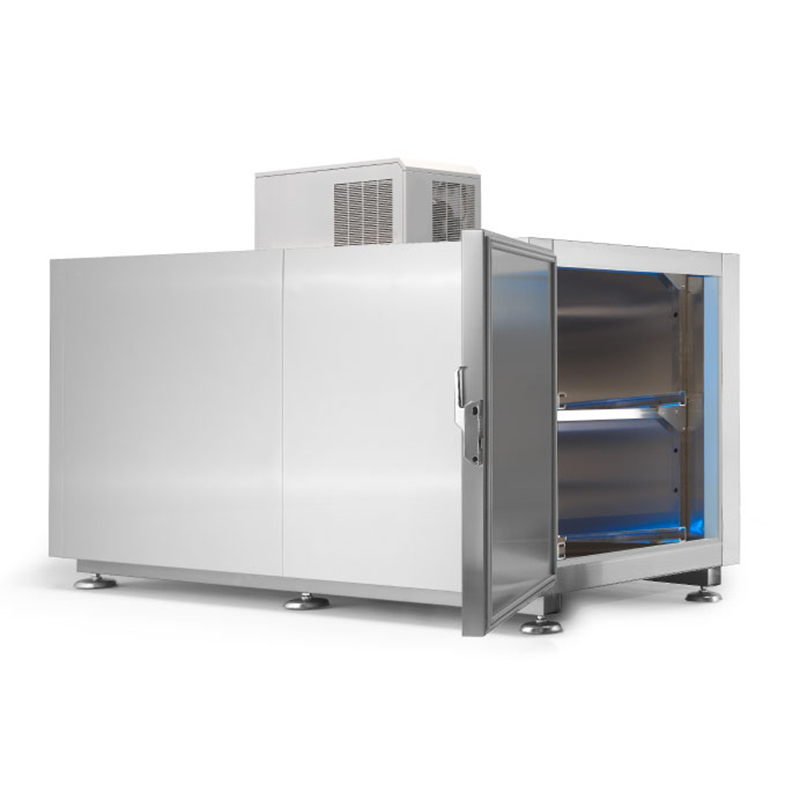
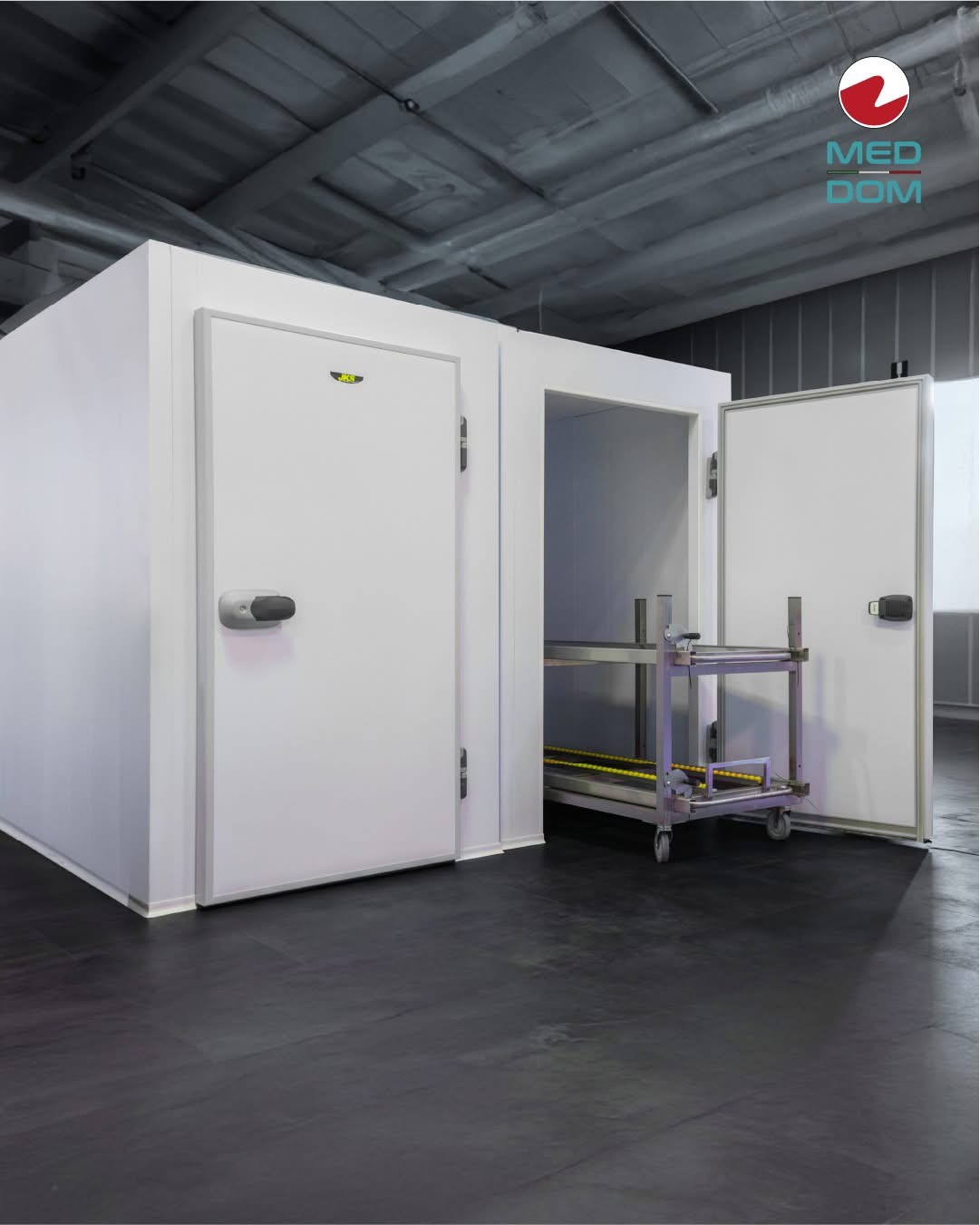
- refrigerated cells and professional cabinets
- technical furnishings and work surfaces
Its key strengths include:
- resistance to detergents and disinfectants
- high mechanical robustness
- stable performance in high-humidity environments
- no chemical reaction with organic materials
It offers the optimal balance between hygiene, safety, and long-term operational reliability.
Frequently asked question: does stainless steel scratch easily?
Yes, micro-scratches may occur during normal daily use. However, these do not compromise hygiene in any way, because they:
- do not create porosity
- do not promote bacterial growth
- can be minimized through proper cleaning procedures
Choosing stainless steel technical furnishings and equipment means investing in hygiene, longevity, and process safety. It is a material engineered for high-responsibility environments, where every detail matters.
Insulation and energy consumption: what Determines the efficiency of a professional refrigerated cell?
A practical guide to selecting high-performance systems and reducing operating costs
Energy efficiency is now one of the primary criteria when choosing a professional refrigerated cell. But what truly affects energy consumption? And how can you determine whether a system is engineered to ensure thermal stability and cost control?
This article clarifies the most important technical parameters.
1. Insulation: the core of efficiency
The factor that most significantly influences energy consumption is the thickness and density of the insulation.
High-density panels reduce thermal dispersion, improving:
- temperature uniformity
- reduced compressor cycling
- stability even with frequent door openings
- lower mechanical stress on components
This is the first feature to evaluate when comparing different refrigerated cells.